A Brief, Patristic Definition of Theosis
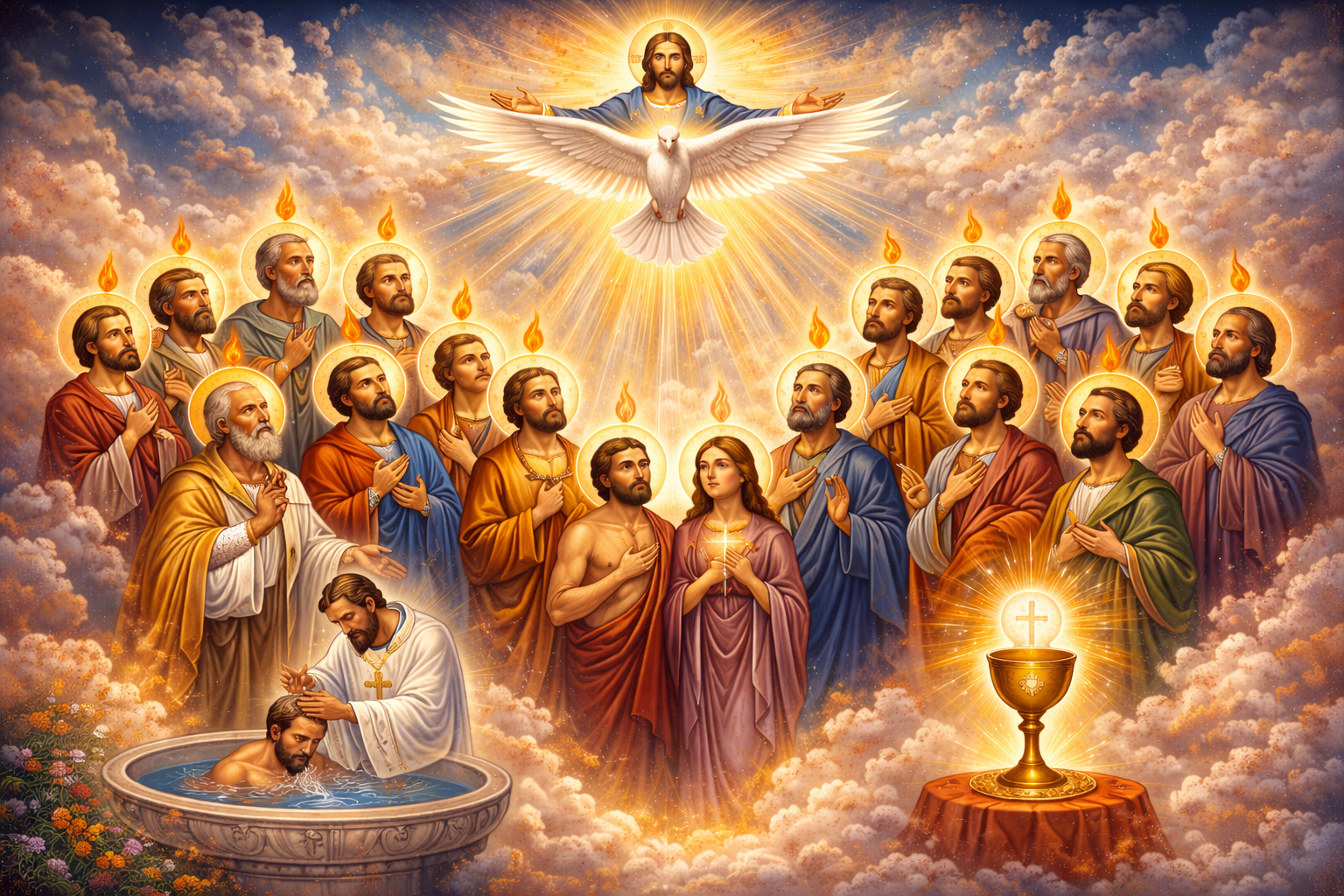
In the early Church, theosis meant something very simple and deeply biblical: salvation is partaking of the divine nature (by grace) — becoming God’s adopted children through union with Christ and regeneration of the Holy Spirit. As Scripture says, we become “partakers of the divine nature” (2 Peter 1:4).
The Fathers understood this to mean that:
- through Christ we are adopted as God’s children
- through the Holy Spirit we are renewed and transformed
- through the Eucharist we partake of Christ
- in all this the image of God in the believer is renewed and restored
This remains fully within the Creator–creature distinction. We do not become God in essence —but we partake of the divine nature (by grace). This is Christianity at its core — not speculation or mysticism, but the natural result of union with Christ.
Patristic Witness to Theosis (Before 451 AD)
Importantly, when the Fathers spoke of theosis (deification), they generally meant union and fellowship with God by means of the concrete means of grace:
- Baptism — new birth and adoption
- The Holy Spirit — indwelling transformation
- The Eucharist — sacramental communion with Christ
The earliest Christian theologians taught that salvation involves theosis—becoming “deified” by grace. Below are direct quotations from key Fathers prior to the Council of Chalcedon.
St. Irenaeus of Lyons (2nd century)
“…the Word of God… became what we are, that He might bring us to be even what He is Himself… through the laver of regeneration unto God.” Against Heresies, Book 5 (Preface + V.11)
Irenaeus explains that the Son of God assumed our human nature so that humans could become like God, partaking of His Divine nature and immortality. In other passages, Irenaeus explicitly links this deifying restoration with baptismal new birth and adoption into the Church.
St. Athanasius of Alexandria (296–373)
“For He was made man that we might be made God; and He manifested Himself by a body that we might receive the idea of the unseen Father; and He endured the insolence of men that we might inherit immortality.” On the Incarnation, §54
Athanasius insists that the Incarnation has a deifying purpose: through union with Christ, we are raised into divine life—by grace, not by nature.
St. Gregory of Nazianzus (330–390)
“Let us become like Christ, since Christ became like us.” Oration 1 (On Easter)
Gregory teaches that the Christian life means becoming like Christ through grace.
St. Basil the Great (330–379)
“Through the Spirit we are restored to paradise… we become children of God… and partakers of the divine nature.” On the Holy Spirit, Ch. 23 (select lines)
St. Basil teaches that the Holy Spirit makes us children of God and partakers of the divine nature.
St. Gregory of Nyssa (335–395)
“…by this communion with Deity mankind might at the same time be deified.” The Great Catechism, XXXVII
Here “communion” means Eucharistic communion — participation in the Body and Blood of Christ — through which our mortal nature shares in divine life.
St. Cyril of Alexandria (376–444)
“…and being men we are called gods, not as the true God… but as God, who bestowed this, willed.” Fragment on Psalm 82 “Those united to Christ in a true manner… are partakers in His nature.” Commentary on the Gospel of John
Cyril is explicit: we are called “gods” by grace and adoption, never by nature. All these Fathers carefully maintain that we never become God by essence. Instead, we partake of the Divine nature through union with God through the Holy Spirit.
Theosis in the Coptic Orthodox Church — Perfect Continuity with the Fathers
The Coptic Orthodox Church—heir to the Alexandrian tradition of Athanasius and Cyril—continues this same doctrine of theosis today.
Liturgical Witness
In the Coptic Liturgy of St. Cyril, the Church prays that through Communion the faithful truly share in Christ’s life and glory. The Liturgy of St. Gregory also expresses Eucharistic union with the divinity of Christ in sacramental language:
And You ascended to the heavens bodily, while You filled all with Your divinity.
These prayers show that Holy Communion is understood as true participation in the divine life.
Glorification and Theosis in the Early Church Fathers
As per scripture, the early Fathers also spoke of believers sharing in Christ’s glory — especially in the resurrection and eternal life — but they did so within the same framework already described: sharing in divine life by grace.
Examples include:
- believers being conformed to the image of Christ (Romans 8:29–30)
- sharing in His incorruptibility and glory at the resurrection
Glorification therefore belongs naturally within the patristic vision of salvation as restored union with God and the renewal of the divine image. This is part of the Christian hope — but always as redeemed and grace‑filled creatures.
Responding to the Claim that Pope Shenouda III Called Theosis “Heresy”
Some people claim that Pope Shenouda III rejected theosis and even called it heresy. This is based on a misunderstanding of what he was condemning. Pope Shenouda rejected false or exaggerated definitions of theosis — especially any teaching that suggests:
- humans share God’s essence, or
- the distinction between Creator and creature is blurred, or
- salvation means becoming divine in nature.
This kind of language has appeared in some modern theological circles, and Pope Shenouda strongly opposed it — rightly. But Pope Shenouda did not reject the Patristic teaching described earlier. In fact, he repeatedly affirmed:
- adoption as children of God
- partaking of the divine nature by grace
- receiving the Holy Spirit
- real Eucharistic union with Christ
This is theosis in the early Church sense.
What the Coptic Orthodox Church Does Not Mean by “Theosis”
The Church does not affirm any doctrine which claims that humans become uncreated or share in God’s essence. This type of language is especially associated with later Palamite theology. For example, Gregory Palamas writes:
“The saints… become uncreated by grace.” Triads, III.1.32
The Coptic Orthodox Church rejects such formulations because:
- God alone is uncreated whether by grace or by nature
- humans remain created beings forever
- grace transforms and indwells us, but never abolishes the Creator–creature distinction
So while the Coptic Church fully affirms that we are partakers of the Divine nature (by grace), it rejects any suggestion that we become uncreated, divine by essence, or anything that undermines God’s absolute uniqueness. This preserves exactly the balance held by the early Fathers.
Summary
The early Fathers taught that God became man so that man might become god — meaning we become partakers of Divine nature (2 Peter 1:4) because we become:
- children of God by adoption
- temples of the Holy Spirit
- participants in the life of Christ through the Eucharist
- renewed and restored to the image of God
The Coptic Orthodox Church teaches precisely this. Far from denying theosis, it lives it sacramentally:
- Baptism & Chrismation — new birth and indwelling of the Holy Spirit
- Eucharist — real participation in Christ
So theosis is not an exotic philosophy. It is Christianity 101 — restored communion with God through Christ in the Holy Spirit, and the restoration of the divine image in the believer, for salvation and subsequent glorification.